The best time to pressure wash your Charlotte home is late April through early May, after the spring pollen settles and before peak summer humidity arrives. Most Charlotte homes benefit from one full house wash per year. Adding targeted seasonal services, a roof soft wash in summer and gutter cleaning in fall, keeps every exterior in good shape year-round.
As an active member of the Better Business Bureau and the Greater Charlotte Apartment Association, Power Wash Charlotte has spent nearly 30 years learning what Charlotte’s climate does to home exteriors. The question we hear most from first-time clients isn’t about price. It’s about timing.
Charlotte has four distinct outdoor maintenance windows, each driven by a different environmental force. Late March through April, pine and oak pollen coats every horizontal surface. June through August, algae peaks on north-facing roof slopes. September through November brings falling leaves and tannin stains on decks. December through February brings freeze risk and occasional ice-melt residue on concrete. Each season has a job to do. Knowing the schedule keeps you ahead instead of catching up.
According to climate data maintained by the National Weather Service for the Charlotte metro area, the region averages 43 to 45 inches of rain per year, spread across all four seasons. Exterior surfaces here rarely get a genuine dry stretch, and that consistent moisture is what drives every service call we get.
Why Does Charlotte’s Climate Drive Year-Round Exterior Maintenance?
Charlotte’s humid subtropical climate keeps exterior surfaces damp long enough for mold, algae, and mildew to find a foothold in every season. Two local factors intensify this beyond what most Southern cities deal with.
The first is the tree canopy. Neighborhoods like Myers Park, Eastover, Dilworth, and Madison Park carry willow-oak, red maple, and pine canopies that deposit heavy pollen from late March through May, then tannin-rich leaf debris from September through November. North-facing walls in these neighborhoods can stay damp for eight or more hours overnight, which is exactly the condition algae and mildew need to spread. The yellow dust and pollen season in Charlotte is addressed in depth in one of our earlier guides, but the short version is that pollen alone can accelerate mildew growth by weeks when it settles into shaded siding panels.
Gloeocapsa magma is a cyanobacterium that feeds on the limestone filler in asphalt shingles and produces the black streaks visible on Charlotte rooftops from June through August. It overwinters in dormant form and resumes active growth when overnight dewpoints climb above 60°F, typically mid-May in the Charlotte metro.
The second factor is red clay. Cecil series clay soil, the iron-rich red clay visible in every graded lot in Waxhaw, Indian Trail, and Mint Hill, tracks onto driveways and concrete surfaces after any significant rain event. It bonds to porous concrete and can return after a standard pressure wash if the right cleaning agent is not used.
Soft washing is a low-pressure cleaning method that applies diluted cleaning agents to break down organic growth safely, without forcing water behind siding panels or stripping granules from asphalt shingles.
What’s the Best Season to Pressure Wash a House in Charlotte?
The year-round service calendar, matched to Charlotte’s actual environmental conditions:
| Season | Months | Priority Service | Charlotte Driver |
|---|---|---|---|
| Spring | Late March-May | Full house wash, driveway, patio | Pollen peak, late March-April; HOA inspection season, mid-March through May |
| Summer | June-August | Roof soft wash, north-side siding | Gloeocapsa magma peaks; high overnight humidity |
| Fall | September-November | Gutter cleaning, deck wash | Leaf debris and tannins; best working-temperature window of the year |
| Winter | December-February | Spot concrete cleaning | Salt and ice-melt residue; freeze risk limits full scheduling |
The sweet spot for a full house wash is late April through early May. Pollen has largely settled, temperatures are consistently above 50°F for cleaning-agent performance, and the algae growth cycle is just beginning rather than already established on north-facing surfaces.
For homeowners in HOA-governed communities, Ballantyne, Highland Creek, Birkdale, Huntersville’s Skybrook neighborhoods, and communities throughout Cornelius and Mooresville, timing the spring wash before the inspection cycle (mid-March through May) can prevent a violation letter before one is issued.
What Does a Spring Service Visit in Charlotte Actually Include?
Spring is the highest-demand window at Power Wash Charlotte. A full spring wash typically covers:
- Siding and trim — the full exterior, with extra attention on north-facing and east-facing walls that collect the most algae and trap morning condensation. NC State Cooperative Extension resources on seasonal outdoor maintenance note that preventive treatment of organic growth is significantly less costly than remediation once a colony is established.
- Concrete surfaces — driveways and walkways pick up pollen buildup, moss, and red clay during spring rains. This is also the time to assess whether concrete sealing makes sense before summer heat arrives.
- Patios and pool decks — shaded patios accumulate mold on grout lines and between pavers over the winter. Pool decks need a clean, safe surface before the July season opens.
- Roof inspection — if black streaks are beginning to appear on north-facing slopes, scheduling a professional roof soft wash in late spring gets ahead of the peak Gloeocapsa growth window by six to eight weeks.
What Should You Clean in Summer and Fall?
Summer (June–August):
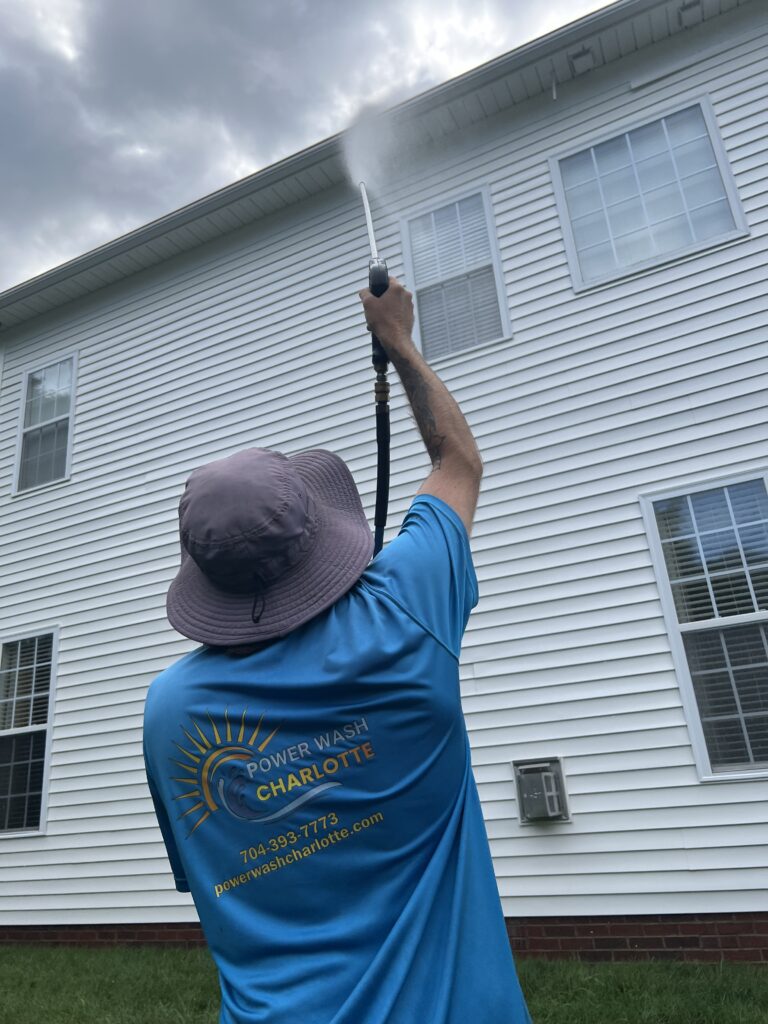
If the spring wash happened, summer is largely a monitoring window. The exception is roof algae. Homes in heavily canopied neighborhoods like Myers Park and Eastover that did not address early streaking in spring should schedule a professional soft wash roof cleaning by July before the growth accelerates. North-facing siding can also green up during a wet June if the spring wash was skipped.
Fall (September–November):
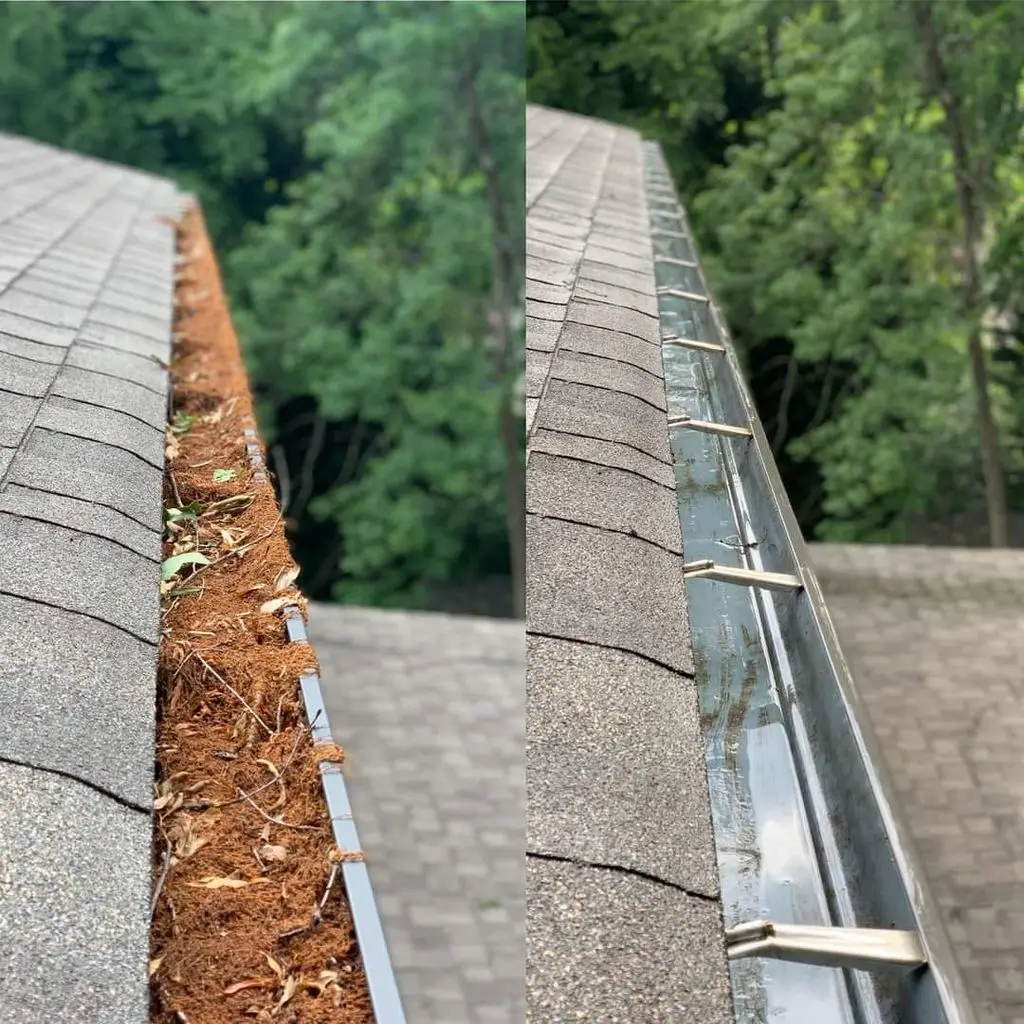
Fall is the best working-conditions window of the year in the Charlotte metro. Temperatures settle into the 60s and 70s after the first cold front in late September, humidity drops, and surfaces dry properly between cleaning passes. Gutter cleaning is the clear fall priority. Pine needles, oak leaves, and cankerworm frass fill Charlotte gutters fast in September and October. A clogged gutter going into the winter rain season can direct water against fascia boards and soffit, leading to rot and eventual wood replacement costs. Decks benefit from a fall pressure wash before any staining or sealing project ahead of winter.
How Often Should You Pressure Wash a Charlotte Home?
Once per year is the right baseline for most Charlotte homes. The actual frequency depends on the home’s exposure and environment.
Homes that may benefit from more frequent service:
- Heavy tree canopy on north or east exposures: Myers Park, Eastover, Dilworth, and the wooded sections of Matthews and Indian Trail
- HOA-governed neighborhoods with active spring inspection programs
- Concrete driveways in red-clay zones, including Waxhaw, Mint Hill, Marvin, and Harrisburg, after significant rain events
Homes that typically do well on one annual wash:
- Newer vinyl-siding homes in open subdivisions with good solar exposure
- Well-drained driveways that shed pollen and debris with normal rainfall
The house pressure washing service at Power Wash Charlotte walks through what each visit involves. Our team can assess during a same-day quote call whether a one-wash or two-wash annual schedule makes sense for your specific home and neighborhood.
Frequently Asked Questions About Pressure Washing Schedules in Charlotte NC
Is spring really the best time to pressure wash a Charlotte home?
Late April through early May is the most popular window because pollen has settled, temperatures support efficient cleaning-agent performance, and the HOA inspection cycle is just beginning. The best time depends on the specific problem: roof algae is a summer priority, and gutters are a fall priority. A full spring wash catches most issues before they need a season-specific fix.
How many times per year does a Charlotte home need exterior cleaning?
Once per year is right for most Charlotte homes. Homes with heavy tree coverage, north-facing siding exposure, or active HOA enforcement may benefit from a second seasonal service. The annual spring wash is the foundation; any additional service depends on what a site inspection reveals about the home’s specific exposure and surface conditions.
Can you pressure wash a Charlotte home in winter?
Yes, with conditions. Pressure washing requires temperatures above 40°F to prevent freezing in equipment and to allow cleaning agents to work correctly. Spot concrete cleaning to remove salt and ice-melt residue is reasonable on warmer winter days, 55°F or above. Full house washes and roof treatments are typically deferred to late March or April when conditions are consistently workable across the Charlotte metro.
How far in advance should I book a Charlotte spring house wash?
Book by late February or early March for an April appointment. Charlotte’s spring window compresses quickly. Most pressure washing companies book out four to six weeks by the time the first pollen drop hits in late March. Homeowners who wait until they can see the yellow film on the driveway often end up on a May or early June waitlist.
Need a quote for your home or property? Call Chris and the Power Wash Charlotte team at (704) 393-7773 or get your free quote.
By Chris Earll, Owner of Power Wash Charlotte
Chris Earll is the owner of Power Wash Charlotte (Cutting Edge Restoration Inc), serving the Charlotte metro since 1996. He and his team have completed thousands of residential and commercial pressure washing projects across Mecklenburg, Union, Cabarrus, Iredell, Gaston, Lancaster, and York counties.