
Why Charlotte Roofs Get Black Streaks Faster Than the South

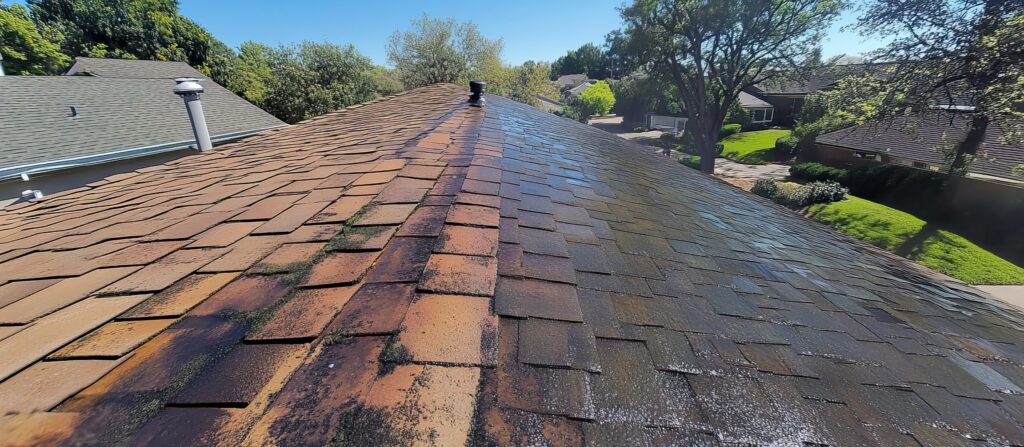
Black streaks on a Charlotte roof are colonies of Gloeocapsa magma, a cyanobacterium that feeds on the limestone filler in asphalt shingles. Charlotte’s humidity, warm nighttime dewpoints, and dense tree canopy cause it to grow faster here than in most other Southern cities, especially on north-facing roof slopes.
 
Power Wash Charlotte’s seven-person team has completed thousands of projects across 19+ cities in NC and SC, and roof algae is one of the three most frequent residential calls we get every summer. Homeowners in Myers Park, Eastover, Highland Creek, and the Birkdale neighborhoods up in Huntersville notice the streaks the same way every time: a neighbor’s roof gets cleaned, and suddenly their own looks twice as dark by comparison.
 
By the first week of July in Charlotte, the streaks that were faint in May are usually fully visible from the curb. The biology behind it is the same all over the Southeast, but the climate here gives the algae a longer head start. This guide explains why Charlotte sees roof algae sooner than its neighbors, what the streaks actually are, why pressure washing is the wrong fix, and what a proper soft wash actually involves.
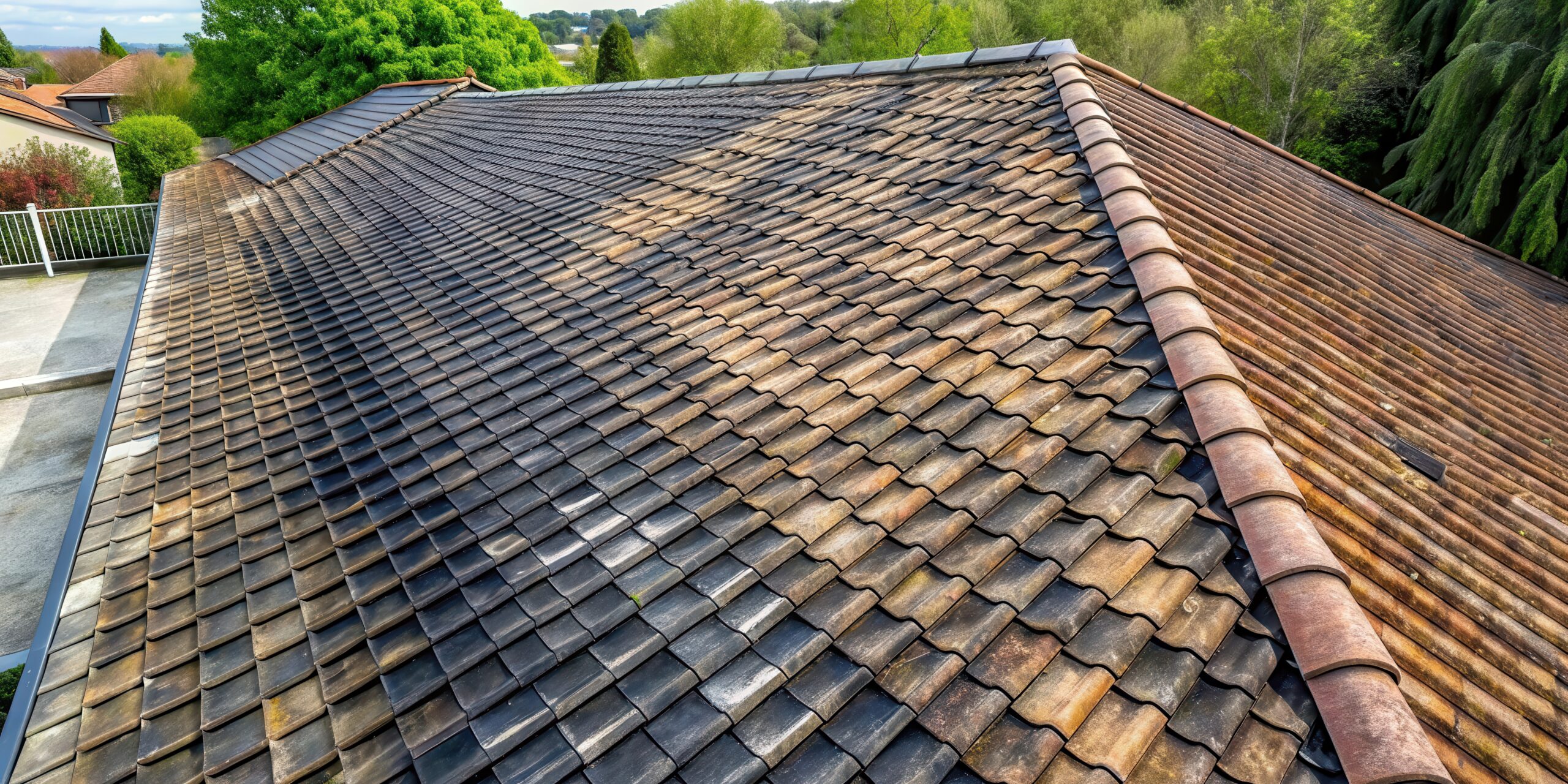
Charlotte black streak roof

Why does Charlotte’s climate produce roof algae faster than other Southern cities?

Charlotte sits in Köppen climate zone Cfa, which is humid subtropical with no real dry season, and the city gets about 43 inches of rain per year spread fairly evenly across the calendar. Relative humidity stays in the 60 to 75 percent range nearly year-round. Summer dewpoints sit between 65 and 72 degrees, which means asphalt shingles never really get a chance to dry out overnight from late May through early September.
 
Algae spores need three things: moisture, warmth, and a food source. Charlotte hands them all three for almost half the year. Compared with cities further south like Atlanta or Augusta, Charlotte gets less direct summer sun on the average roof because of its mature tree canopy, and compared with cities to the north like Richmond, the warm season is longer. The result is a longer effective growing season for the colonies that produce the visible black streaks.
 
The streaks themselves do not appear overnight. Spores land, anchor, and start feeding. By the time you can see a faint discoloration from the driveway, the colony has typically been growing for six to eighteen months. By the time it has streaked all the way down the slope, it has been growing for two to four years.

What are the dark streaks actually made of?
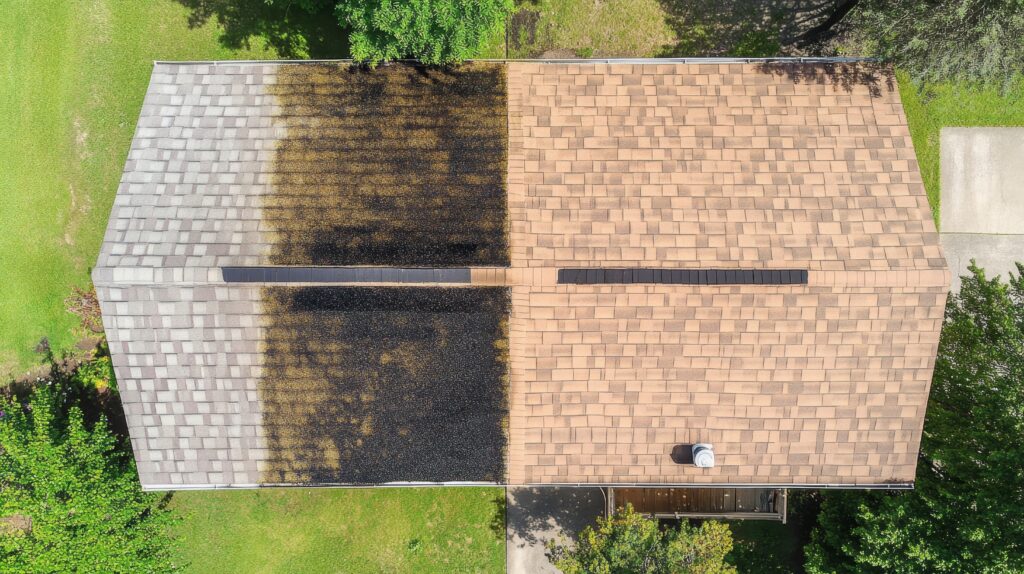
Gloeocapsa magma is a cyanobacterium, not a fungus or a mold. Cyanobacteria are among the oldest life forms on the planet, and the species that lives on asphalt shingles produces a dark, UV-protective sheath as it grows. That sheath is what you see from the street.
 
The colonies feed on the limestone (calcium carbonate) filler that manufacturers blend into shingle granules to give them weight and rigidity. As the bacteria digest the limestone, they spread laterally across the shingle and downward with rainwater runoff. That is why the discoloration almost always shows up as vertical streaks rather than random spots. Water carries the colony down the slope shingle by shingle.
 
There is one important corollary. The algae itself does not destroy your shingles in the short term, but moss does. If a Charlotte roof is shaded enough that moss starts to grow alongside the algae, the moss can lift the leading edges of the shingles and cause real water damage. That is when an aesthetic problem becomes a structural one.
Clean and dirty roof halves comparison from above.

Why do north-facing slopes always streak first?

Sun is the one variable that slows the colonies down. South-facing slopes get longer hours of direct sun, which dries the shingles faster after rain and exposes the algae to more UV. North-facing slopes stay damp for hours longer every morning and never see direct overhead sun.
 
In practice, this means almost every Charlotte roof streaks first on its north and northeast faces. The same house can have a perfectly clean south slope and a heavily streaked north slope. Homeowners often think the streaks are a paint or shingle defect because they only see them on one side. They are not. They are just the visible part of an algae population that landed evenly across the roof and only thrived on the shaded face.
 
Surrounding tree cover amplifies the effect. A north slope under a willow oak canopy in Eastover or Myers Park can stay damp twenty hours a day during a humid week. That is essentially a greenhouse for Gloeocapsa magma.

Why do older Charlotte neighborhoods like Myers Park and Eastover streak the worst?

Three factors stack on each other in Charlotte’s older neighborhoods. The tree canopy is mature and dense, which keeps roofs damp. The roofs themselves are often older asphalt shingles that pre-date the algae-resistant copper-granule technology that became standard around 2010. And the lots are wider, which means more roof surface and more north-facing exposure.
 
Myers Park, Eastover, Dilworth, Madison Park, and parts of Plaza Midwood show the worst average streaking in the metro. Newer master-planned communities like Ballantyne, Highland Creek, Skybrook, and Birkdale tend to have algae-resistant shingles installed and less mature canopy, so streaks show up later in the roof’s life. Lake-adjacent neighborhoods like The Peninsula and The Farms in Mooresville sit somewhere in between, with high humidity from the lake offsetting younger shingle stock.

Why is pressure washing the wrong fix for asphalt shingles?

Pressure washing strips the colored granules off asphalt shingles. Those granules are what protect the asphalt mat underneath from UV degradation, and once they are gone, the shingle’s effective lifespan drops fast. The damage is not always visible on day one, but it shows up as accelerated bald spots and cracking within a year or two.
 
Every major shingle manufacturer takes the same position. The GAF technical bulletin on algae staining (R-102) explicitly recommends a chlorine-based cleaning solution applied without a pressure washer. ARMA, Owens Corning, and CertainTeed all align with the same guidance. A roof cleaned with a pressure washer is a roof at risk of voiding its manufacturer warranty. That is a real exposure on a roof system that often costs $14,000 to $30,000 to replace in the Charlotte market.
 
This is why “soft wash” matters as a category. It is not a marketing word. It is a different cleaning method entirely.

What does a soft wash on a Charlotte roof actually involve?

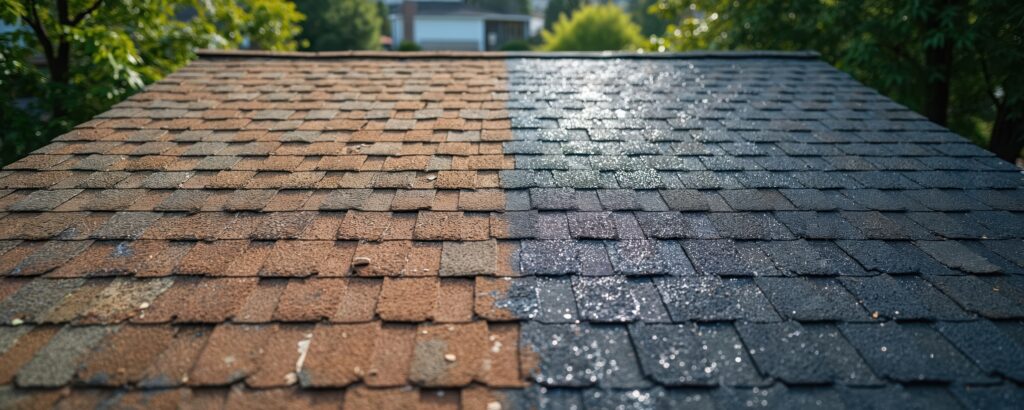
A soft wash on an asphalt shingle roof uses a low-pressure pump (around 60 to 100 PSI, less than a typical garden hose) to apply a sodium hypochlorite cleaning agent blend to the roof. The cleaning agent kills the algae colony at the cellular level. After a short dwell time, the roof is rinsed gently. Within a few weeks, normal weather rinses the dead colony off the shingles, and the roof returns to its original color.
 
Here is what our team typically walks through on a Charlotte roof:
StepWhat We DoWhy It Matters
Property WalkthroughWe walk the property with the homeowner before any equipment is used, identifying landscaping, delicate surfaces, and areas that require protection.Establishes clear expectations and helps prevent surprises during the cleaning process.
Plant ProtectionShrubs, flowers, and landscape beds near roof edges and gutter downspouts are pre-rinsed and protected as needed.Dilutes cleaning solution runoff and helps keep surrounding vegetation safe.
Soft-Wash ApplicationA professional sodium hypochlorite cleaning solution is applied at low pressure across the entire roof, with additional treatment on heavily stained areas.Eliminates algae, mold, and organic growth without damaging roofing granules.
Dwell Time & Gentle RinseThe cleaning solution is allowed to dwell briefly before the roof is gently rinsed.Maximizes cleaning effectiveness while preventing overexposure and protecting gutters and surrounding surfaces.
Final Walk-AroundWe perform a second walkthrough with the homeowner after the cleaning is complete.Ensures all treated areas meet expectations and allows any concerns to be addressed immediately.
Post-Cleaning ResultsRemaining light discoloration may continue to fade during the next few rainfall cycles.Dead algae and organic residue naturally wash away over time, eliminating the need for aggressive scrubbing or high pressure.
The cleaning agent is the active ingredient, not the pressure. A roof cleaned this way usually looks dramatically better the same day and continues to brighten for two to four weeks as residual dead colony washes off.

How often should you clean a roof in Charlotte’s climate?
For most Charlotte homes, a soft wash every three to five years is enough to keep streaks from becoming visible from the street. Roofs in heavily shaded neighborhoods like Myers Park, Eastover, and parts of SouthPark may need it every two to three years. Roofs in newer subdivisions with algae-resistant shingles and less canopy can often go five to seven years.
 
The smartest hedge against early roof replacement is a single soft wash on schedule. A roof that streaks visibly for years tells insurance carriers and future buyers that the home has not been maintained, which can drive both insurance non-renewal letters and lower offer prices at sale. The maintenance cost is a small fraction of the replacement cost, and the visible payoff usually starts the same day the wash is done.
 
Two more details matter. Trimming back overhanging branches gives the roof more direct sun and slows regrowth. And if you ever replace the roof, asking specifically for shingles with copper-infused, algae-resistant granules will buy a decade or more of streak-free appearance.

Frequently Asked Questions About Black Streaks on Charlotte Roofs

Are the black streaks on my Charlotte roof actually damaging the shingles?

The Gloeocapsa magma colony itself is not significantly damaging asphalt shingles in the short term. It feeds on limestone filler, which is a slow process. The bigger risks are aesthetic (insurance and resale impact), the possibility of moss growing alongside it (which lifts shingle edges), and the optics of an unmaintained roof. The cost of a soft wash is a small fraction of the cost of waiting and replacing damaged shingles later.

It is increasingly common in the Charlotte market, especially since 2024. Several major carriers have started flagging roofs with visible algae or moss growth on inspection photos and either non-renewing or requiring proof of cleaning. A documented soft wash with before-and-after photos is usually enough to satisfy the carrier.

Technically yes, in the same way you could rewire your panel yourself. The two real risks are getting on a wet, slick asphalt-shingle roof (the leading cause of homeowner ladder and roof injuries) and over-applying a bleach concentration that damages gutters or kills landscaping. A professional crew works from the ground with a low-pressure pump, calibrated cleaning agent concentrations, and plant protection.

The dramatic difference is visible the same day. Light residual streaking continues to lift over the following two to four weeks as normal rain washes the dead colony off the shingles. Our team takes after photos at the end of the visit so the homeowner has documentation immediately.

Pricing depends on the roof’s pitch, square footage, and accessibility. A typical Charlotte single-family home roof soft wash runs in the low to mid hundreds of dollars and is often bundled with a house wash for a better total price. Power Wash Charlotte gives a fair price upfront with no hidden fees and same-day quote response in most cases.

Need a quote for your home or property? Call Chris and the Power Wash Charlotte team at (704) 393-7773 or get your free quote.
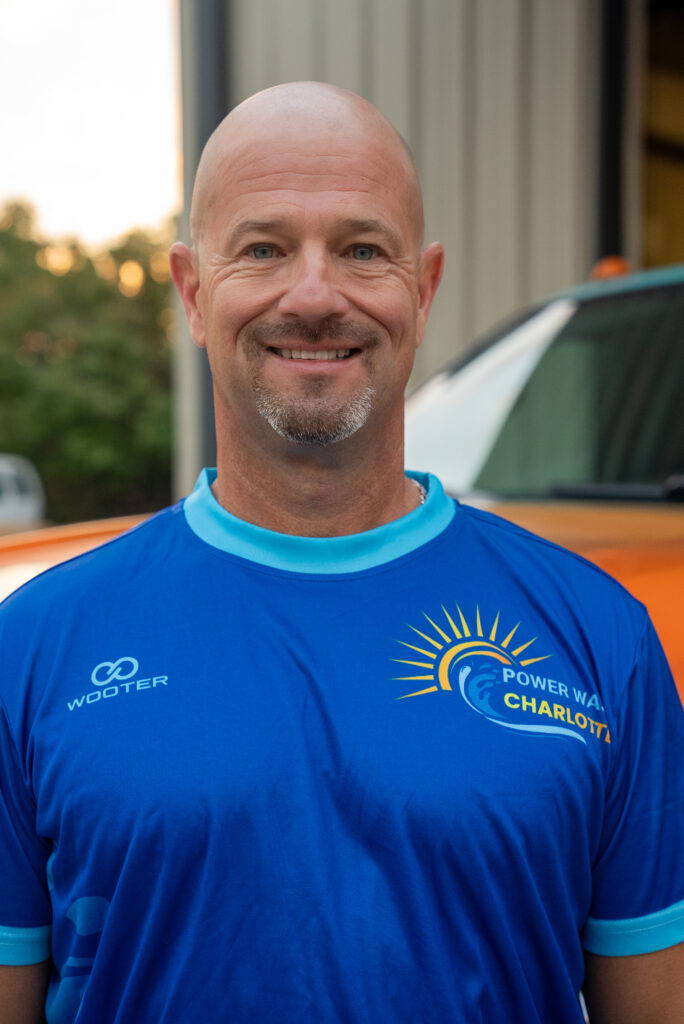
Written by Chris Earll,  Owner and President – Sales and Marketing of Power Wash Charlotte
 
Chris Earll is the owner and President of Sales and Marketing for Power Wash Charlotte, which has served the Charlotte metro since 1996. He and his team have completed thousands of residential and commercial pressure washing projects across Mecklenburg, Union, Cabarrus, Iredell, Gaston, Lancaster, and York counties.
Chris Earll President - Sales and Marketing
CATEGORIES
table of contents
Share

CHECK OUT OUR CURRENT DISCOUNTS AND SPECIALS!