Got an HOA Letter About Mildew? Your 14-Day Charlotte Plan

An HOA letter about mildew is a written notice from your homeowners association informing you that algae, mildew, or staining on your home’s exterior violates the community’s covenants and giving you a deadline to clean it. In Charlotte, most associations allow 14 to 30 days to cure the violation before fines begin.
 
As an active member of the Better Business Bureau and the Greater Charlotte Apartment Association, Power Wash Charlotte has spent nearly three decades working with HOA-governed neighborhoods across Mecklenburg and Union counties. Our team gets calls almost every week from homeowners in Ballantyne, Highland Creek, Skybrook, and the master-planned communities around them holding a freshly opened letter from Cedar Management, Hawthorne Management, or William Douglas. The fix is almost always straightforward, but the clock is real.
 
Every spring, north-facing siding across Charlotte starts to turn green. By late April, the HOA inspectors are out walking the streets, and the violation letters start arriving in mailboxes a week or two later. If yours just showed up, take a breath. Two weeks is more than enough time to handle this the right way, and this guide walks you through exactly how.
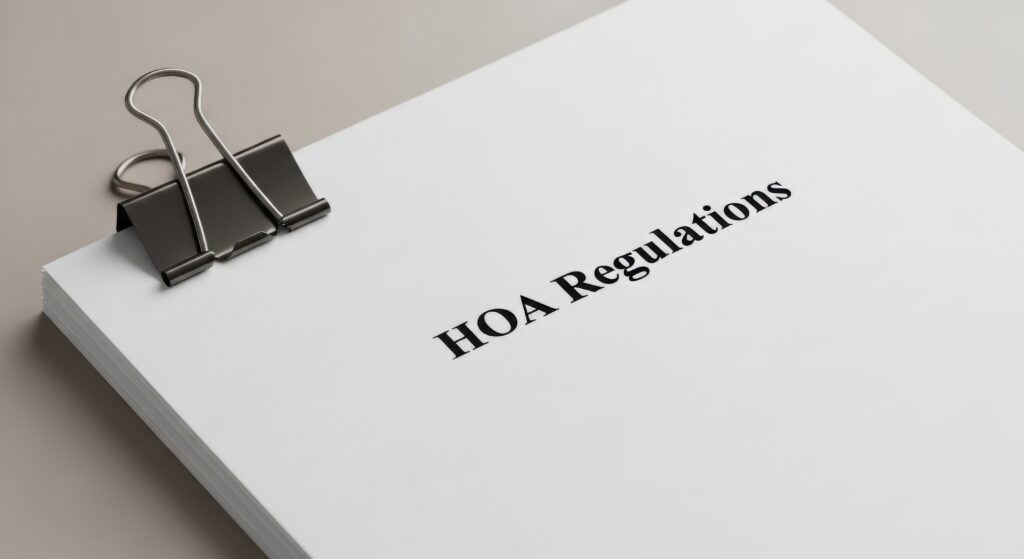
HOA regulations

What does this kind of violation notice actually mean?

An HOA mildew violation letter is the formal first step in your association’s covenant enforcement process, and it is governed in North Carolina by Chapter 47F of the General Statutes (the Planned Community Act). The letter usually identifies the specific surface in violation (siding, roof, driveway, fence, gutters), references the section of your covenants you are out of compliance with, and gives you a cure period. It is not a fine. It is a warning.
 
What the letter is really telling you is that an inspector physically observed something visible from the street or a common area. In Charlotte, the most common trigger is green or black staining on the north-facing or shaded side of a home, which is almost always Gloeocapsa magma algae or simple mildew feeding on humidity and pollen. Both come off easily with the right method.
 
The letter will also tell you what happens if you ignore it. Under North Carolina law, after written notice and a hearing, an HOA can fine you up to $100 per day the violation continues, with a $2,500 cumulative cap before a new hearing is required. That escalates fast.

How long do you really have to comply with a Charlotte HOA letter?

Most Charlotte-area associations allow 14 to 30 days to cure a mildew violation. Some letters specify the deadline plainly. Others reference the covenants and require you to dig out the document yourself. If your letter does not list a date, call the management company before the weekend ends and ask for the cure deadline in writing.
 
The 14-day window is the most common in master-planned communities like Ballantyne, Highland Creek, Skybrook, and the Birkdale neighborhoods up in Huntersville. That sounds tight, but two weeks is plenty of time to schedule a professional wash, get it done, and submit photo proof. The main risk is treating the letter as a low-priority item and looking up two weeks later having done nothing.

Which surfaces does an HOA letter typically flag in Charlotte?

The same three or four surfaces show up on letter after letter:
  • Siding mildew on the north or shaded side of the home (vinyl, Hardie, or painted)
  • Roof algae streaks running down the shingles, usually worst on north-facing slopes
  • Driveway and walkway staining from algae, red clay runoff, or oil
  • Fence and gutter discoloration from tannin streaks and biological growth
Letters in newer Union County and Cabarrus County subdivisions also frequently call out red clay tracking on driveways and sidewalks. That stain is iron oxide bound to clay and does not come off with a garden hose. It needs a targeted treatment, not just pressure.
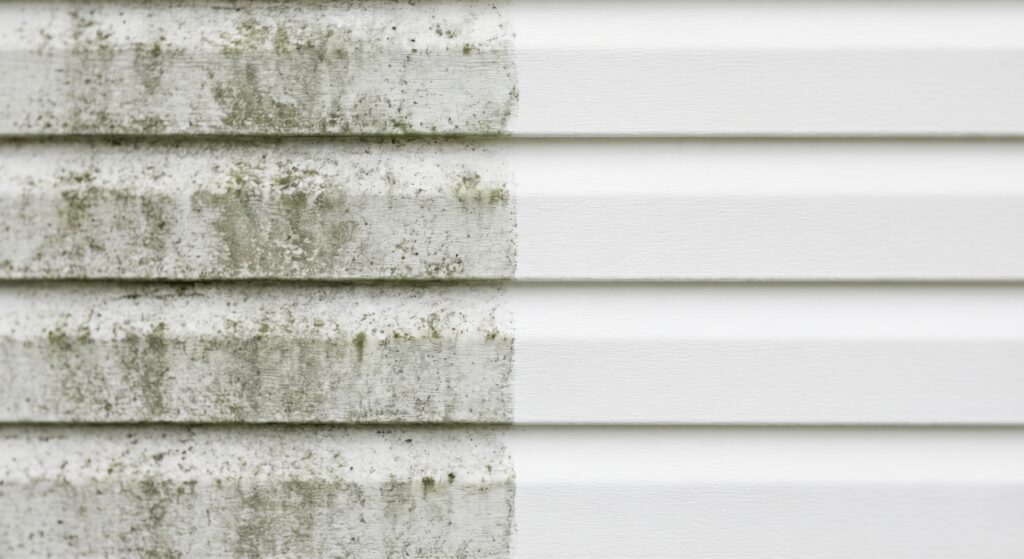
Transition from dirty to clean white house siding

What are the 14 days of your Charlotte compliance plan?

Here is the day-by-day plan our team walks homeowners through over the phone. It assumes a 14-day cure window. If your letter gave you 30 days, you have more breathing room, but the order of operations is the same.
TimelineAction ItemWhy It Matters
Day 1Read the HOA violation letter carefully. Note the compliance deadline, the specific surface cited, and the HOA or management company contact information.Understanding the exact requirements and deadline helps you avoid unnecessary fines and delays.
Days 1–2Contact 2–3 professional pressure washing companies. Request a same-day quote and confirm they use a soft-wash method for siding and roofs.Fast response times are often the best indicator of a reliable contractor who can meet your deadline.
Days 2–3Schedule your cleaning service for a date between Days 4 and 8.Scheduling early provides a cushion for weather-related delays, which are common during Charlotte’s spring and summer seasons.
Days 4–8Complete the cleaning service. Walk the property with the technician before work begins and again after it is finished.A final walkthrough ensures all problem areas have been addressed before the crew leaves.
Day After ServiceTake clear, dated photographs of all areas identified in the violation notice.Documentation provides proof of compliance if questions arise later.
Days 9–12Email the photos to your HOA or management company. Include your address, the violation notice date, and any reference or violation number.Prompt communication helps close the violation quickly and demonstrates good-faith compliance.
Days 13–14Request written confirmation that the violation has been resolved and the file is closed.Having written confirmation protects you from future misunderstandings or administrative errors.
The biggest mistakes our team sees are waiting until Day 10 to start calling companies, picking by price alone without asking about method, and forgetting to send the after photos. The wash itself is the easy part.
 
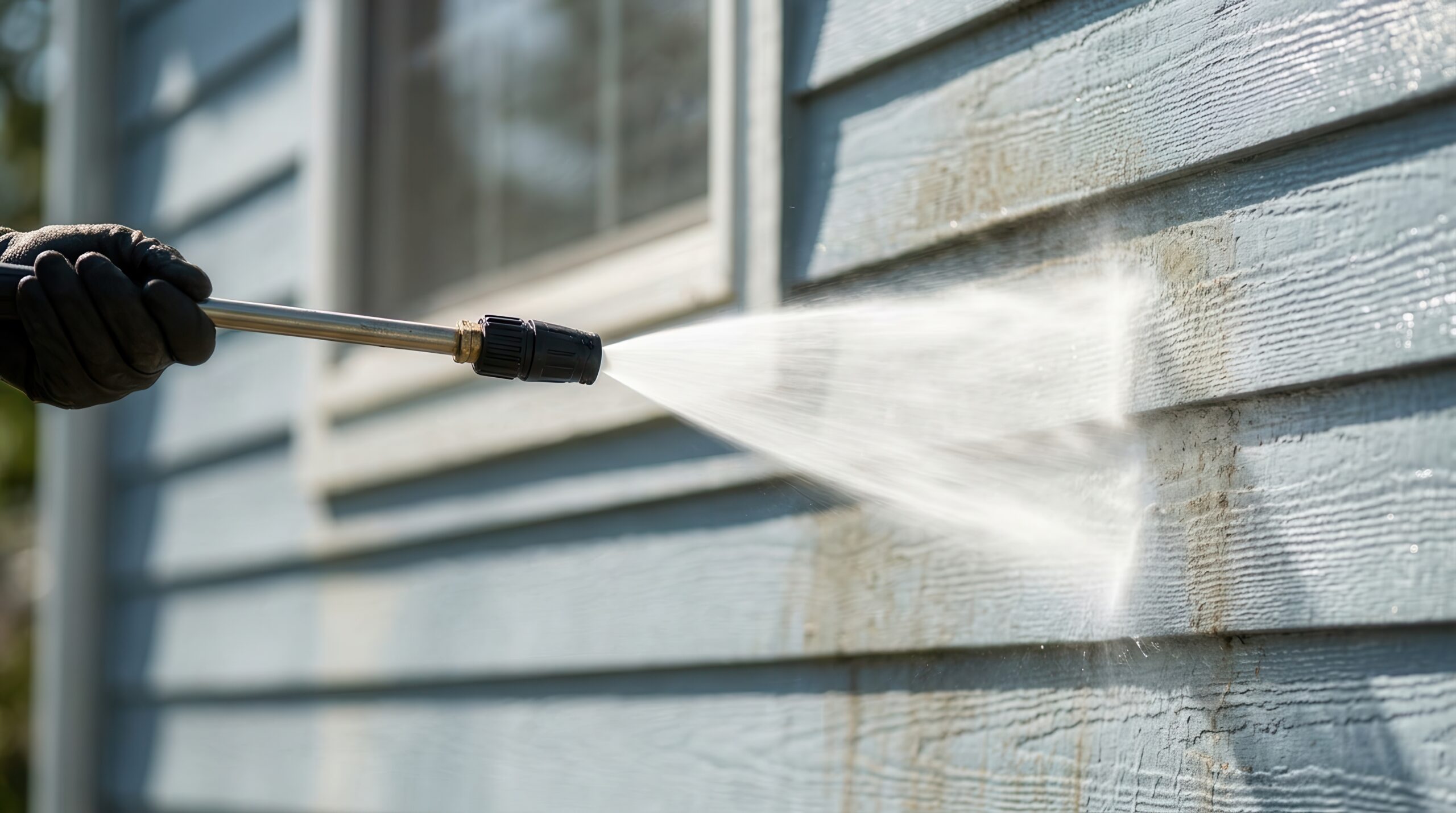
A soft wash is a low-pressure cleaning method that uses specialized cleaning agents to safely remove algae, mildew, and dirt from siding and shingles without damaging surfaces. The Asphalt Roofing Manufacturers Association explicitly warns against using a pressure washer on asphalt shingles because it strips granules and can void your roof warranty. For siding, soft washing is also the gentler choice and is what your HOA inspector is implicitly asking for when the letter mentions mildew.

Can you respond and request more time if you need it?
Yes, and most Charlotte-area management companies will grant a short extension if you reach out before the deadline. Email the management company, reference the violation, and explain that you have hired a contractor with a confirmed appointment date. Include the company name and the scheduled date. A documented work order usually buys another seven to fourteen days.
 
What does not work is silence.
 
If you do not respond at all, the file moves to the next stage of enforcement. That is when the hearing notice and the daily fine clock become real.
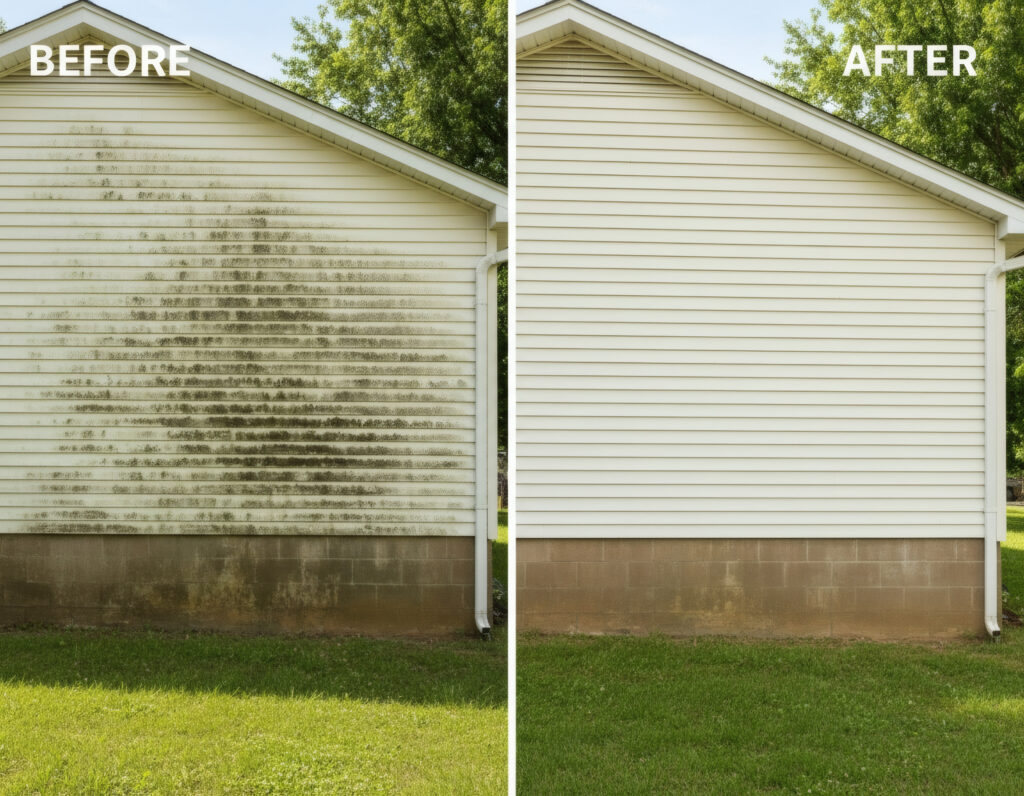
House Siding Before After Cleaning

What happens if you ignore the HOA letter?

Ignoring the letter is the most expensive option. Under the Planned Community Act, your HOA can hold a hearing and then fine you up to $100 per day for as long as the violation continues, capped at $2,500 before a new hearing is required. After that, the association can place a lien on the property. In a community with strong enforcement, a single ignored mildew letter can become a four-figure problem within a few months.
 
Our team has cleaned plenty of homes where the homeowner waited too long, paid fines, and then still had to pay for the wash. The wash itself is almost always the smallest line item in that whole sequence.
 

Frequently Asked Questions About HOA Mildew Letters in Charlotte

How much does it cost to clean mildew off a Charlotte home for an HOA letter?

A targeted soft wash on the flagged surface (one side of the house, the roof, or the driveway) typically runs a few hundred dollars. A whole-home soft wash that clears every surface at once usually runs more, but it is often a better value because it prevents the next letter. Power Wash Charlotte gives a fair price upfront with no hidden fees and same-day quote response in most cases.

Not when it is done correctly. Our team walks the property with the homeowner before starting, covers or moves anything sensitive, uses cleaning agents that are safe for plants and landscaping, and rinses the surrounding plants down before and after. Soft wash pressure is well below what your garden hose puts out.

Both are common. Sending dated after-photos to your management contact is the fastest way to close the file because it does not depend on the inspector’s next drive-through. Reference the violation number, your address, and the date the work was completed.

Mildew and algae regrow when the conditions that fed them are still there. North-facing walls, shaded slopes, and surfaces near downspouts will always grow it back fastest. Many Charlotte homeowners in HOA-governed neighborhoods schedule a yearly soft wash in late spring to stay ahead of both the inspector and the next letter.

No. Under North Carolina law, the association must give you written notice of the violation and a hearing before fines start. The first letter is the notice. Acting on it during the cure window is what keeps the process from ever escalating.

Need a quote for your home or property? Call Chris and the Power Wash Charlotte team at (704) 393-7773 or get your free quote.

Written by Chris Earll,  Owner and President – Sales and Marketing of Power Wash Charlotte
 
Chris Earll is the owner of Power Wash Charlotte (Cutting Edge Restoration Inc), serving the Charlotte metro since 1996. He and his team have completed thousands of residential and commercial pressure washing projects across Mecklenburg, Union, Cabarrus, Iredell, Gaston, Lancaster, and York counties.
Chris Earll President - Sales and Marketing
CATEGORIES
table of contents
Share

CHECK OUT OUR CURRENT DISCOUNTS AND SPECIALS!