When most people think about pressure washing, they assume the key to great results is simple: more pressure. In reality, effective exterior cleaning is far more complex. True professional pressure washing is based on a proven framework known as the 5 Elements of Clean.
These elements—Water Quality, Agitation, Time, Concentration, and Heat—work together to remove dirt, grime, organic growth, oil, and environmental buildup safely and effectively. When properly balanced, they deliver superior results while protecting the surfaces being cleaned. When misunderstood or misused, they can lead to poor outcomes or permanent damage.
Understanding the 5 Elements of Clean helps explain why professional pressure washing consistently outperforms DIY efforts and inexperienced operators.
What Are the 5 Elements of Clean?
The five elements that determine how well a surface can be cleaned are:
- Water Quality
- Agitation
- Time
- Concentration
- Heat
These elements are interdependent. Changing or removing one element requires adjusting one or more of the others to compensate. Professional pressure washing is the practice of balancing these five variables to achieve the best possible result without harming the surface.
Water Quality: The Starting Point for Effective Cleaning
Water quality is often overlooked, yet it forms the foundation of every cleaning process.
Factors such as water hardness, mineral content, and flow rate all influence how effectively contaminants are removed. Professional pressure washing prioritizes water flow (measured in gallons per minute) over excessive pressure. Higher flow allows debris and contaminants to be rinsed away efficiently, reducing the need for aggressive force.
Relying solely on high pressure can damage concrete, etch surfaces, and shorten the lifespan of exterior materials. Proper water quality and flow create consistent, controlled cleaning that protects surfaces while delivering noticeable results.
Agitation: Loosening Contaminants the Right Way
Agitation refers to the physical action that helps break the bond between contaminants and the surface. This can include:
- Controlled spray patterns
- Surface cleaners
- Rotary or mechanical tools
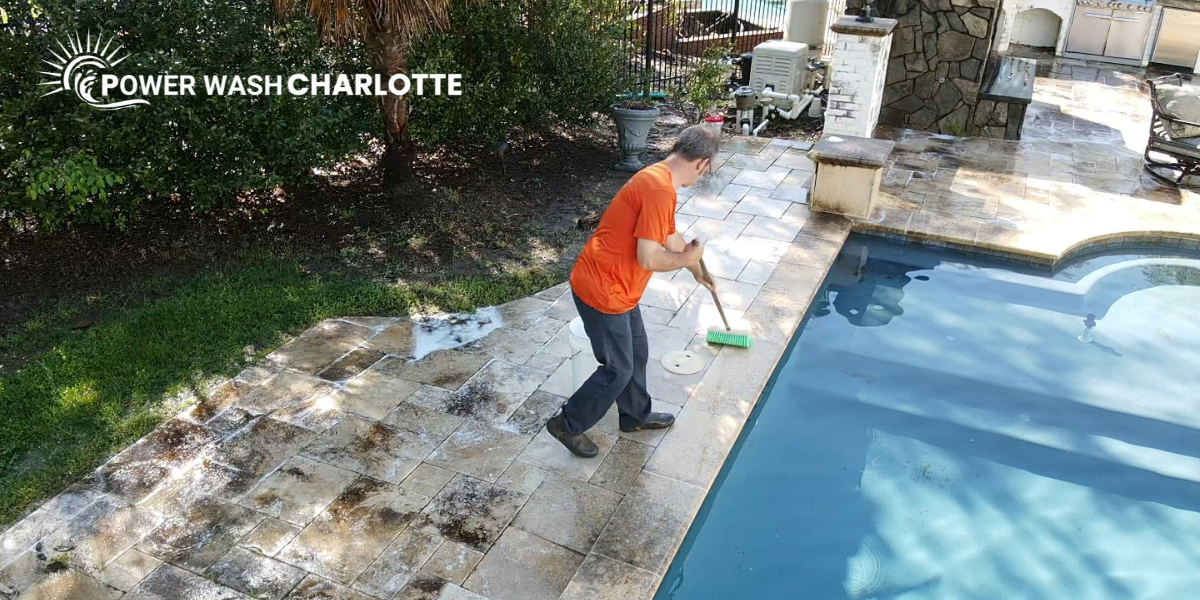
- Brushing when appropriate
Professional agitation is about precision, not force. Instead of blasting a surface with excessive pressure, professionals use agitation to gently loosen buildup so it can be safely rinsed away.
This approach minimizes surface wear and eliminates the risk of damage caused by inexperienced operators who equate pressure with performance.
Time: Allowing the Cleaning Process to Work
Time—often referred to as dwell time—is one of the most critical and misunderstood elements of cleaning.
Cleaning solutions require time to penetrate and break down dirt, algae, mold, grease, and pollutants. Rushing this step leads to uneven cleaning and lingering stains, often prompting the use of higher pressure as a shortcut.
Professionals understand that patience produces better outcomes. Allowing adequate dwell time means contaminants release more easily, reducing the need for aggressive agitation or harsh methods.
Concentration: The Science of Proper Chemistry
Concentration refers to the strength of the cleaning solution being used.
If the concentration is too low, contaminants remain bonded to the surface. If it is too strong, the surface can be damaged or discolored. Professional pressure washing relies on surface-specific chemistry, carefully mixed at the correct concentration for each application.
Different surfaces—concrete, brick, stone, or coated materials—require different chemical approaches. Precision in concentration ensures effective cleaning while preserving the integrity and appearance of the surface.
Heat: When Temperature Makes a Difference
Heat is a powerful cleaning accelerator.
Hot water improves the effectiveness of cleaning solutions by increasing chemical reactions and breaking down stubborn contaminants more efficiently. It is especially effective for:
- Oil and grease stains
- Gum removal
- High-traffic areas with heavy buildup
Using heat allows professionals to reduce chemical strength and agitation, creating a more balanced and surface-safe cleaning process.
Why the 5 Elements Must Work Together
No single element can deliver a proper clean on its own.
For example:
- Reducing heat may require more time or stronger chemistry
- Lower chemical concentration may require increased agitation
- Shortening dwell time often leads to excessive pressure
Professional pressure washing is not about maximizing one element—it is about balancing all five. Experience is what allows professionals to make the right adjustments based on surface type, level of buildup, and environmental conditions.
The Role of Experience in Achieving Consistent Results
Understanding the 5 Elements of Clean is one thing; applying them correctly is another.
Every property presents unique challenges, from surface composition to exposure levels. Professionals draw on years of hands-on experience to adjust the balance of water quality, agitation, time, concentration, and heat for each situation.
This is why professional pressure washing consistently delivers safer, more consistent results than one-size-fits-all approaches.
Clean Is a System—Not a Shortcut
Effective pressure washing is not about shortcuts or maximum force. It is a deliberate process built on knowledge, technique, and balance.
By applying the 5 Elements of Clean correctly, professional providers achieve:
- Deeper, longer-lasting cleaning
- Reduced surface wear
- Improved appearance
- Safer, more controlled results
This scientific approach explains why experienced companies like Power Wash Charlotte are able to deliver high-quality outcomes across a wide range of exterior cleaning challenges.
Understanding What “Clean” Really Means
The next time you see dramatic before-and-after pressure washing results, remember that pressure alone did not create them. Behind every effective cleaning is a careful balance of water quality, agitation, time, concentration, and heat.
When these five elements work together, the result is not just a cleaner surface—it is a safer, smarter, and more professional clean.